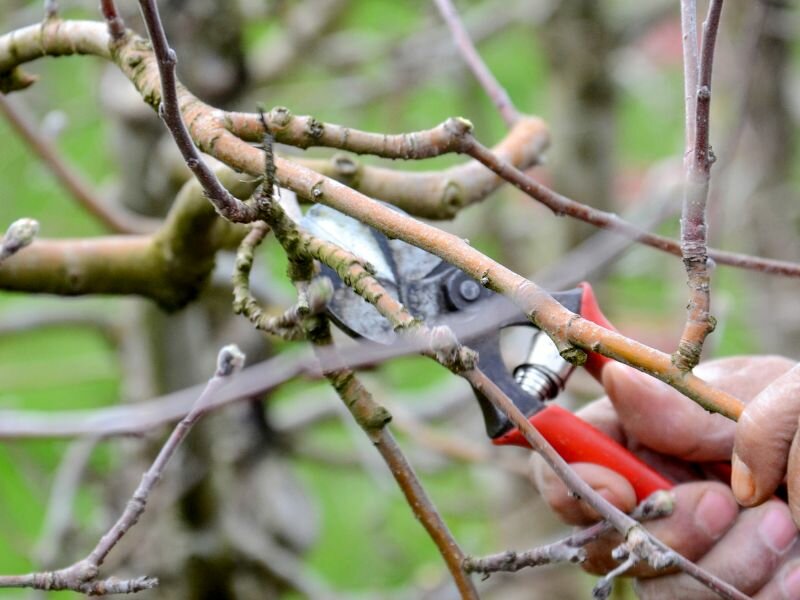
Knowing when and how to prune plants can be daunting for many gardeners, once a cut is made, it cannot be undone, and this may inhibit flowering or even lead to excessive growth as the plant tries to grow back to its original size.
Mid to late winter in the UK is the ideal time to prune many summer-flowering deciduous shrubs, including Buddleja, Dogwood and paniculata hydrangeas, along with fruit bushes such as currants and gooseberries. This is also a good period for pruning roses and certain trees, including apples, beech and hazel, helping to improve structure and overall plant health before spring growth begins.
Spring-flowering shrubs and tender evergreens should be left unpruned until after flowering or warmer spring weather arrives. The aim of winter pruning is to remove old or unproductive wood, shape plants, and encourage strong, healthy new growth for the season ahead.
Pruning is done for several reasons, the first is to temporarily restrict size. Many plants will respond to hard pruning by making vigorous growth to compensate and this may be at the expense of flowering wood. The golden rule is to under rather than over prune. Plants that flower first and make growth afterwards such as Forsythia should be pruned immediately after flowering. Fo not just tip back taking out all the young growth, make a few cuts close to the base of the plant to renew some of the main branches. Plants that flower from mid-summer onwards such as Buddleja davidii should be pruned at the start of the growing season to make new flowering wood.
Pruning Clematis is another problem that is easily solved. The earlier they flower the less you prune them. The early flowering types that bloom in late winter and early spring are best left unpruned apart from cutting out weather damaged growth. This group includes Clematis montana, armandi, alpina and cirrhosa. Early summer flowering hybrids are best tipped back to a strong pair of buds as soon as new growth starts in spring and a few old stems can be cut out completely after flowering, Late summer flowering Clematis can be pruned quite hard as soon as new growth commences in spring.
For the best advice on pruning your plants, the Royal Horticultural Society’s website www.rhs.org.uk is an excellent source of advice.
Good secateurs and loppers are essential for making clean pruning cuts that heal quickly to avoid the risk of fungal infection. We recommend Darlac pruning tools as they are professional quality at an affordable price. It is always worth buying a sharpener as regular sharpening is essential to maintain cutting performance and reduce hand strain. We sell a range of excellent sharpeners to maintain your tools in tip top condition.